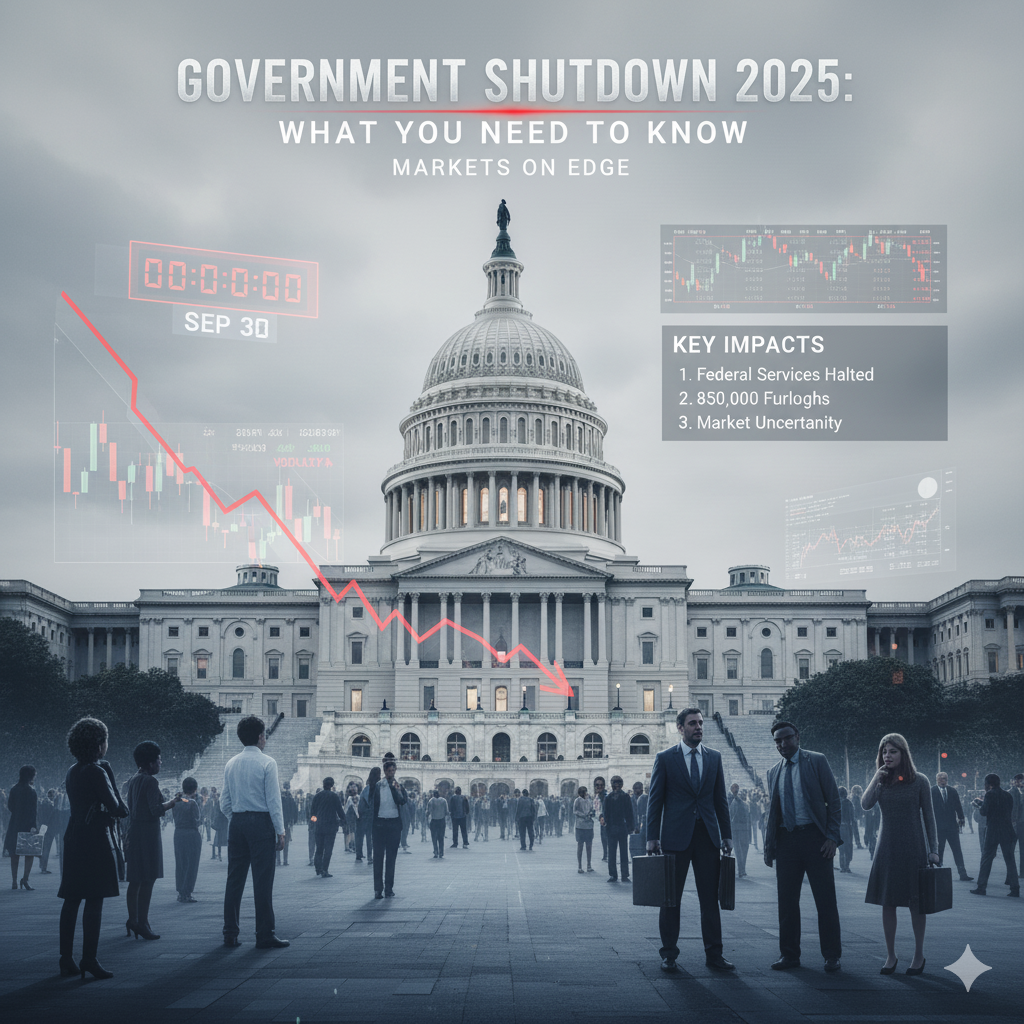
The clock is ticking in Washington D.C., and a US government shutdown is looking increasingly likely. With a critical deadline fast approaching, a political stalemate threatens to halt federal operations, furlough hundreds of thousands of workers, and send shockwaves through the global financial markets.
For investors and ordinary citizens alike, the key question is: What does this mean for my money?
This article breaks down everything you need to know about the looming US government shutdown, from its root causes to its potential impact on your investments and the broader economy.
What Exactly Is a US Government Shutdown?
Simply put, a US government shutdown happens when Congress fails to pass funding legislation to finance government operations. When there’s no money legally allocated, non-essential federal agencies must cease their activities.
This means:
- Non-essential federal employees (over 850,000 people) are furloughed, meaning they are sent home without pay.
- Government services like national parks, passport processing, and some administrative functions are suspended.
- Essential services like national security, air traffic control, and law enforcement continue to operate, but often with unpaid staff.
Why Is a Shutdown Happening in 2025?
The current crisis stems from a deadlock in Congress over a stopgap funding bill. While passing this bill should be routine, it has been stalled by a sharp disagreement over a controversial surveillance law, nicknamed the ‘Patriot Bill 2.0’. A significant number of lawmakers from both parties are refusing to approve government funding unless this specific provision is removed, leading to the current high-stakes standoff.
The deadline for a resolution is midnight, Tuesday, September 30. If no deal is reached by then, the shutdown begins.
The Financial Fallout: How the Shutdown Could Affect You
While it might seem like a distant political issue, a US government shutdown has very real and immediate financial consequences.
Stock Market Volatility 📉
Wall Street hates uncertainty, and a shutdown is the ultimate symbol of political and economic instability. Historically, the periods leading up to and during a shutdown see increased stock market volatility. The Dow Jones and S&P 500 are already showing signs of nervousness as investors react to the political gridlock. This could lead to a broader market sell-off as investors move away from stocks and into safer assets like bonds and gold.
Global Ripple Effect 🌍
As the world’s largest economy, when the US sneezes, the world catches a cold. A US government shutdown can trigger a “risk-off” sentiment globally. This often means foreign institutional investors (FIIs) may pull capital from emerging markets, including India, leading to a downturn in local stock exchanges.
The US Dollar and Your Investments
A shutdown can weaken the US dollar as it damages the perception of stability in the US economy. This has a mixed impact:
- For importers, a weaker dollar can be a concern.
- For investors in other currencies or commodities like gold, it can be beneficial.
The key takeaway is increased unpredictability across all asset classes. (You can follow live market updates from authoritative sources like [Link to an external news site like Reuters or Bloomberg].)
Frequently Asked Questions (FAQ)
1. Has a US government shutdown happened before? Yes, shutdowns have occurred several times. The longest one was in 2018-2019 and lasted for 35 days.
2. How long could this shutdown last? The duration is unpredictable. It could last a few days or several weeks, depending entirely on how quickly Congress can reach a compromise.
3. Will I get my government payments during a shutdown? Payments for programs like Social Security and Medicare are considered mandatory and typically continue uninterrupted. However, a prolonged shutdown can create administrative delays.
Disclaimer :- The information in this article is for educational purposes only and is not intended to be financial or investment advice. All investments involve risk, and you should conduct your own research and consult with a qualified financial advisor before making any investment decisions.