
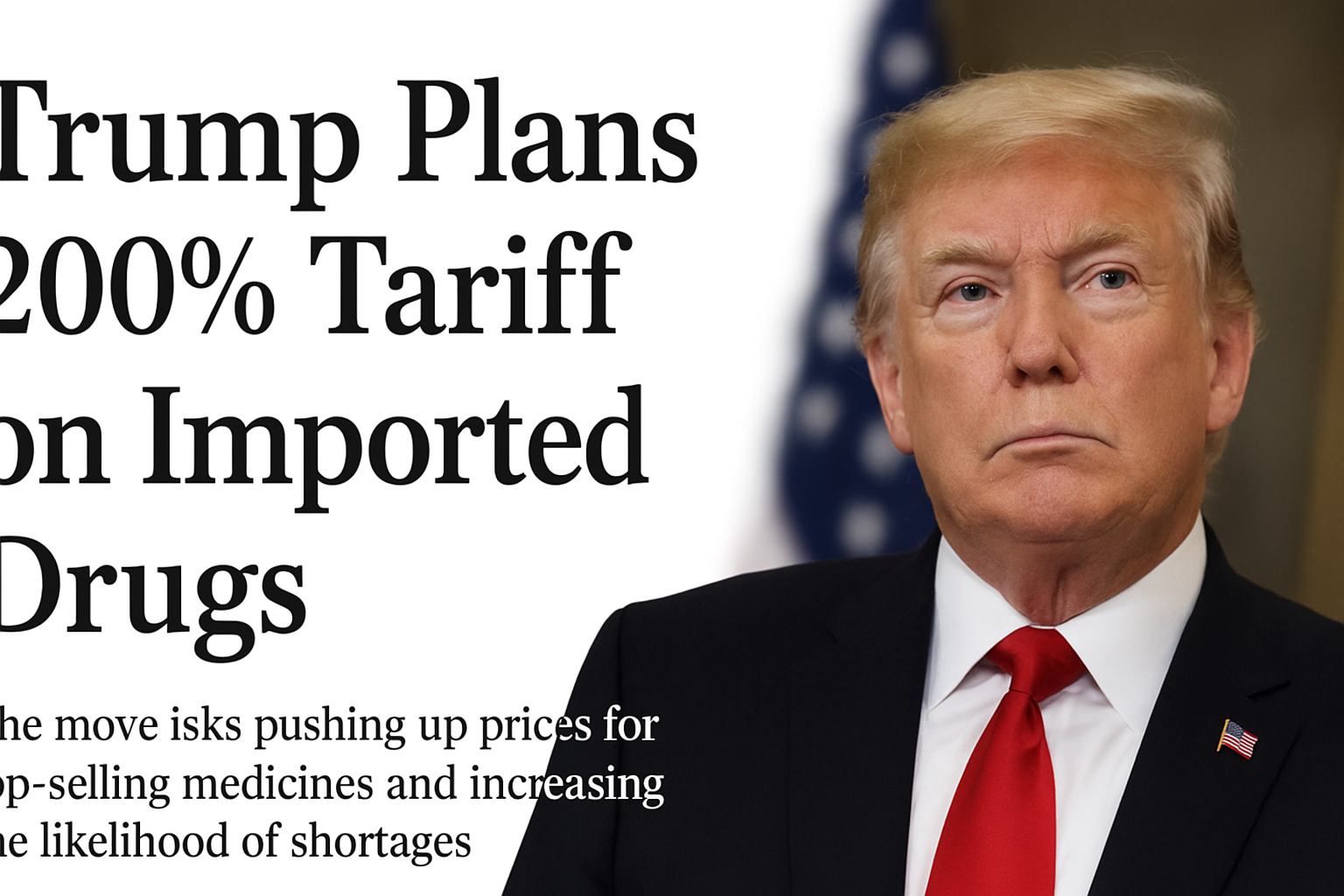
The Trump administration has introduced a startling proposal: a dramatic tariff of up to 200% on imported pharmaceuticals. This marks a sharp turn from the longstanding policy of duty-free importation for most medicines. Instead of lowering costs, this move may trigger soaring drug prices, potential shortages, and higher insurance premiums.
What’s Behind the Move?
Import Dependency & National Security
President Trump defended the idea under Section 232 of the Trade Expansion Act—citing the U.S.’s overreliance on foreign drug supplies, especially from China and India. The initiative follows last year’s COVID-era supply shocks and aims to incentivize domestic drug manufacturing.
Tariff Rollout Timeline
Trump has suggested an incremental implementation: starting with a small levy, potentially building up to 200% over the next year and a half, giving companies time to adapt through stockpiling or reshoring production.<br>
Analysts note this delay could mean the actual impact won’t be felt until 2027 or 2028.
The Fallout: Prices, Supply, and Insurance
Cost Impact
Even a modest 25% tariff could eventually increase U.S. drug prices by 10–14%, particularly affecting generics that dominate the prescription market.
Supply Chain Risks
Many generics rely on foreign active ingredients 97% of antibiotics and 92% of antivirals making full supply chain relocation incredibly expensive and time-consuming.
Generics in Jeopardy
Low-margin drug makers may drop out of the U.S. market entirely rather than absorb such tariffs. Patients relying on affordable generics would face the brunt.
How Markets Feel
Despite the bold proposals, investor reaction has been muted. Indian and European pharma stocks initially dipped but rebounded quickly. Analysts at Barclays and UBS dismiss the 200% figure as “rhetoric”—impractical and inflationary—especially amid political and legal hurdles.
Bottom Line:
The proposed tariffs are a strategic signal, emphasizing reshoring and control. But real-world implementation could disrupt pricing, supply, and health access in unexpected ways.
Disclaimer: This article is for informational purposes only and is not investment advice.
Click here to know about japan investment in india